
Design Story · Design leadership · Org design
A design consultancy, built inside the government.
Treasury’s Communications & Digital Services was a reactive print-and-production shop. Over six years I rebuilt it into an outcome-focused design consultancy — new service lines, the department’s first human-centered CX program, and agency-wide standards — and moved every number that mattered. All of it with the same 16 people and the same $2.2M budget I started with.
The mandate
I inherited a service group that produced graphics, photography, and print on request — competent, busy, and invisible above the task level. Treasury’s leaders didn’t need more deliverables; they needed communication and service that changed outcomes across an 88,000-person federal enterprise. My job was to turn a production shop into a partner.
The reframe
A production function is measured by throughput — jobs in, jobs out. A consultancy is measured by whether the work moved the mission. That shift, from order-takers to advisors, was the whole game — and it had to happen without a bigger team or a bigger budget. So the transformation ran on operating model, skills, and positioning, not spend.
What I built
I stood up new service lines — design strategy, communications support, editorial, and video — so the team could engage upstream, before a deliverable was even specified. I created Treasury’s first human-centered CX program, in partnership with MITRE, inside the Office of Treasury Operations — training an operations team with no design background to run customer interviews, service blueprints, and journey maps. And I set agency-wide written and visual standards so quality could scale without a proportional headcount.
The proof
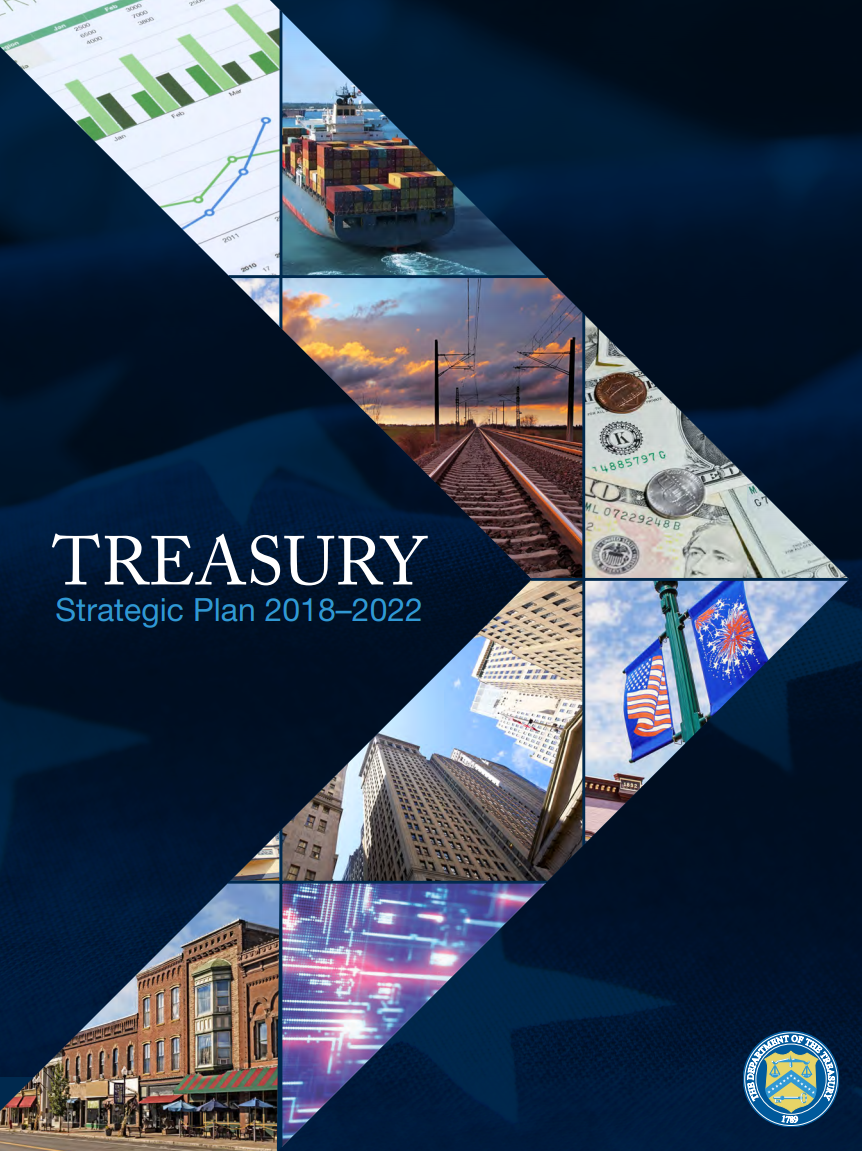
With the same 16 staff and the same $2.2M budget: customer satisfaction rose 24%, employee satisfaction 10%, and production output 40%. The team’s award-winning 2018–2022 Strategic Plan — which I led and launched to Congress and all 88,000 employees — drove a 78% increase in plan usage. See the Strategic Plan story.
Leading the team
I built and ran the 16-person group end to end: recruiting, hiring, career coaching, budgets, IT facilitation, project management, and performance reviews for union and non-union staff. The teams were cross-functional and cross-organizational — mixing career civil servants and political appointees on brand identity, policy communications, financial-literacy awareness, and enterprise-wide style standards.
The flagship deliverable
A sample of the work


Communications at scale
